A simple hair care routine is all it takes to keep your hair healthy. But even that can be frustrating if you have dry, weak and brittle hair. However, dryness and breakage are not caused by just one thing. There are a number of habits, environmental factors and product choices that can strip moisture, weaken the hair shaft and make strands prone to snapping over time.
The first step to fixing dry brittle hair is to understand what causes it. Once you know the causes, it’s easier to pick the right hair care products.
What Does Dry, Weak and Brittle Hair Look Like?
Before understanding the causes, let us try to identify whether you have dry and damaged hair.
Common Signs of Dry and Brittle Hair
- Rough texture that feels coarse to the touch
- Dull-looking hair with little shine
- Persistent frizz, even after styling
- Split ends that keep appearing
- Hair snapping easily during brushing or combing
- Difficult detangling, especially when dry
- Dry ends that feel straw-like
- Lack of softness and manageability
These signs result from a lack of moisture, weakened cuticles or both.
Is Dry Hair the Same as Damaged Hair?
Dry hair and damaged hair are often mentioned together, but they are not exactly the same.
- Dry hair is hair that lacks moisture and conditioning. It feels rough and appears dull, but the structure may still be okay.
- Damage means the hair structure is weakened. The cuticle is raised or cracked, Keratin proteins are compromised and strands break more easily.
If dryness is left untreated, it can lead to damage over time. Once the hair is damaged, it’s more prone to drying out. They both need to be gently cleansed, regularly nourished and protected from further stress.
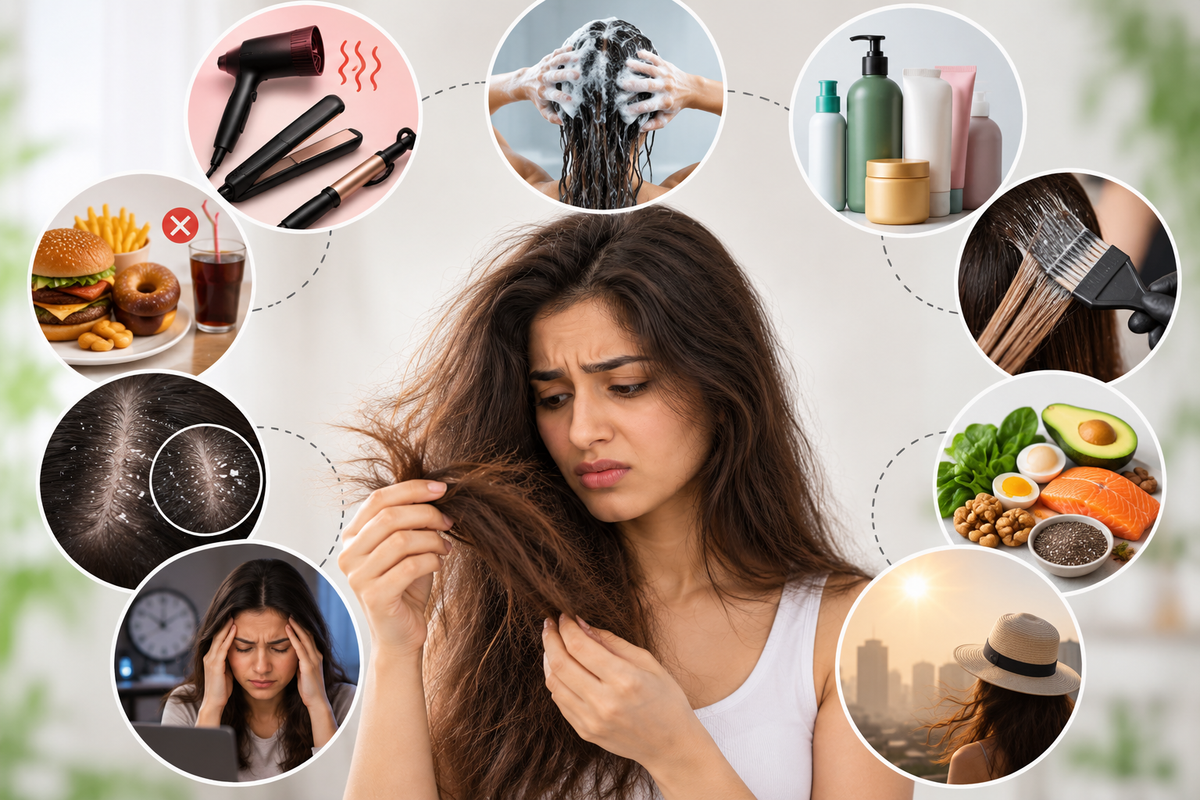
9 Common Reasons Why Hair Becomes Dry, Weak and Brittle
1. Excessive Heat Styling
Many hair routines use hair straighteners, curling irons and blow dryers as common tools. They are often used at high temperatures and can cause serious damage.
Repeated exposure to high heat can alter the structure of the hair shaft, damage the cuticle and increase dryness and breakage. The result is rough texture, split ends or more breakage when you comb your hair.
Wet hair that is styled with high heat is even more vulnerable. Water within the shaft can turn to steam and cause internal damage, sometimes called 'bubble hair'. This pattern, over weeks and months, results in dry, brittle, breakable hair, says Pubmed research.
Regular oiling with a nourishing hair oil and protective hair care practices can help to lubricate and condition the hair.
2. Washing Hair Too Frequently
If you shampoo too often, you strip away the natural oils that protect and soften the hair. This is made worse by very hot water and harsh cleansers.
Dermatologists usually recommend washing based on how oily or dirty the scalp feels. Most people need it two or three times a week. For those with dry, coarse or curly hair, once a week or once every two weeks may work better. Some people with fine or oily hair need to wash more often, but even daily shampooing can be drying for many.
Consider using a mild Ayurvedic shampoo. Bhumika Vedics Ayurvedic Shampoo is made using the traditional 7-Day Kashayam process and Ayurvedic herbs. It cleanses without stripping too much, so it’s great for everyday use on dry or damaged hair.
3. Using the Wrong Hair-Care Products
Some shampoos, conditioners and styling products have strong surfactants, alcohols or fragrances that dry out strands. Others are not formulated for textured or chemically treated hair.
Using products not suited to scalp and hair needs can increase dryness and breakage. Use a gentle cleansing and nourishing routine to avoid unnecessary dryness.
Bhumika Vedics Ayurvedic Shampoo is suitable for everyday use and contains herbal ingredients to care for the scalp and promote healthy-looking hair. It works well in a routine to minimise dryness and keep strands soft and manageable.
4. Chemical Treatments and Hair Coloring
Bleaching, colouring, straightening, and perming hair use strong chemicals. NCBI notes that the processes alter the internal structure of the hair or cut open the cuticle to change colour or shape.
Due to repeated chemical treatments, hair strands become more fragile, porous and susceptible to breaking. The cuticle no longer lies smooth on color-treated hair, making it feel drier and look duller.
For repeatedly processed hair, regular nourishment and gentle cleansing become especially important. Regular oiling & deep conditioning & using mild shampoos will help in retaining moisture & reducing further damage.
5. Not Giving Your Hair Enough Nourishment
Dry and rough hair often lacks regular conditioning. If you skip oil treatments, avoid conditioners, and shampoo, strands feel dry and less conditioned. Ill-conditioned hair is characterised by a lack of softness, rough ends and dry-feeling strands. If you don't oil, the cuticle stays up, resulting in friction, tangling and breakage.
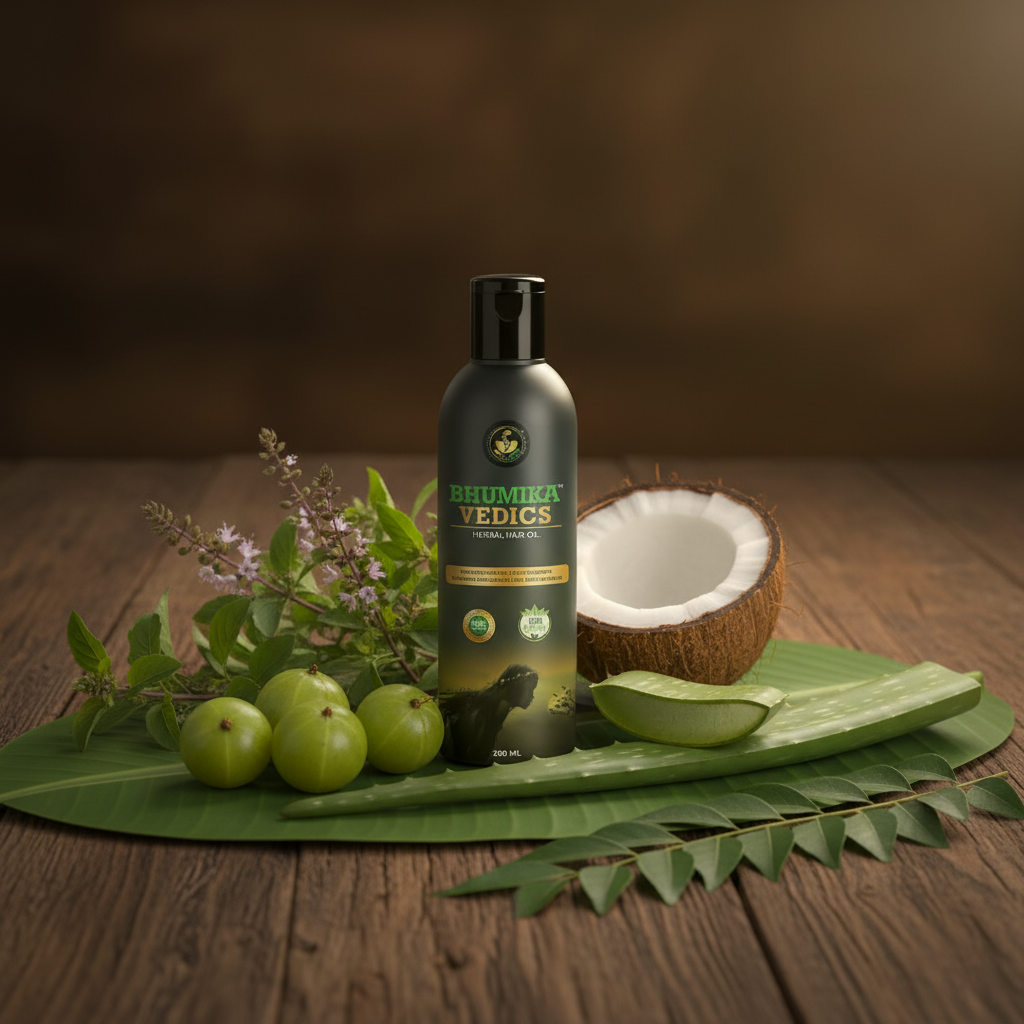
Ayurvedic hair oil has been used for centuries to enhance scalp nourishment and hair care. If you're searching for a hair oil for brittle hair, make regular hair oiling, gentle cleansing and less heat a part of your haircare routine. Bhumika Vedics Herbal Hair Oil has 18 chosen medicinal herbs. It moisturises the scalp and nourishes the hair, making it a great option for those with dry and damaged hair.
6. Sun, Heat, Pollution and Environmental Exposure
Hair is affected by sun exposure, outdoor heat, pollution, humidity and chlorinated or salt water. UV rays can degrade keratin and dull colour. Pollution particles can collect on the scalp and strands. Chlorine and salt dry hair out, making it feel rough.
After long exposure to the sun, swimming or pollution, your hair may start to feel a lot rougher. Usually the ends are the first place that shows. This eventually results in breakage and split ends.
Regular oiling, gentle cleansing and a good conditioning routine are a simple defence. This helps build a barrier and restores lost moisture.
7. Poor Nutrition and Nutrient Deficiencies
Sufficient protein and vital nutrients are necessary for normal hair growth. Certain nutritional deficiencies, especially if severe, can lead to changes in hair and increased shedding.
Hair is mostly made of a protein called keratin. Very low diets in protein, iron, zinc, biotin and essential fatty acids have been linked with hair loss and changes in texture in some cases. A healthy diet can help keep your hair healthy overall.
8. Stress and Lifestyle Habits
In some people, prolonged or significant stress can affect the hair growth cycle and may result in more shedding. Hair falling out is more directly related to stress than to hair shafts becoming brittle.
Lifestyle factors such as smoking, excessive alcohol consumption and lack of hydration can affect scalp health and hair quality. Managing stress and sticking to healthy habits will help your hair over time.
9. Underlying Scalp or Health Conditions
Sometimes, dry, weak, brittle hair is related to scalp issues or health problems. Dandruff, seborrheic dermatitis, hormonal changes and thyroid imbalances may affect the texture and strength of hair.
And if good care doesn’t correct hair problems, it might be worth checking with a health care provider. By tackling the underlying causes, hair care routines can be improved
How to Care for Dry, Weak and Brittle Hair Naturally
Start With Gentle Cleansing
The first step in the care of dry brittle hair is gentle shampoo. Harsh cleansers remove oils, increasing dryness.
Bhumika Vedics Ayurvedic Shampoo is prepared by traditional Ayurvedic methods, including a 7-day Kashayam process. It contains herbal ingredients that cleanse gently while supporting scalp care and nourishment. This is a perfect addition to an everyday hair-care routine for those seeking natural hair care.
There is no single brittle hair treatment. The right approach depends on what is creating the dryness, weakness or breakage.
Why Choose Ayurvedic Hair Care for Dry and Brittle Hair?
Ayurveda’s approach to hair health is holistic. It doesn’t just look at the strands but also the scalp, lifestyle and long-term habits.
- The traditional Ayurvedic approach focuses on prevention and balance
- Herbal ingredients help to nourish the scalp and promote healthy-looking hair
- Consistent hair-care products create better results over time.
- Gentle daily care lessens cumulative damage
- Ayurvedic heritage of Kerala utilises centuries of plant-based knowledge
Bhumika Vedics builds its prestige on natural ingredients, Ayurveda and the traditional hair-care heritage of Kerala. This makes Bhumika Vedics products a perfect fit for those looking for herbal hair care products and ayurvedic hair care products.
Bhumika Vedics Hair Care for Dry, Weak and Brittle Hair
Bhumika Vedics Herbal Hair Oil
Great for hair nourishment and a regular oiling of the scalp. This ayurvedic hair oil for dry hair is a combination of 18 medicinal herbs that help condition strands and support the scalp.
→ [Shop Herbal Hair Oils]
Bhumika Vedics Ayurvedic Shampoo
Ideal for gentle cleansing and as part of a regular hair care routine. This Ayurvedic shampoo for dry hair cleans without over-drying and is well suited to a regular hair-washing routine.
→ [Buy Ayurvedic Shampoo]
Ayurvedic Shampoo + Herbal Hair Oil Combo
Best for those who wish for a simple two step hair-care routine as per Ayurveda. The oil and shampoo together create a simple 2-step routine of oiling and gentle cleansing.
→ [Shop Combo]
How to Build a Simple Ayurvedic Hair-Care Routine
Step 1: Oil Your Hair
Use Bhumika Vedics Herbal Hair Oil. Massage into the scalp and through your hair lengths. Care more for dry ends and weak spots prone to breaking.
Step 2: Allow the Oil to Nourish the Hair and Scalp
Follow the product directions for the amount of time to leave the oil on. If your scalp takes it well, some people like to leave hair oil for a few hours before washing.
Step 3: Cleanse With Ayurvedic Shampoo
Go for Bhumika Vedics Ayurvedic Shampoo. Focus on the scalp and wash gently. Do not scrub too hard. Let the lather run down the lengths.
Step 4: Reduce Heat and Rough Handling
Limit heat styling and tight hairstyles and use a wide-tooth comb on damp hair. This lets the hair care routine progress effectively.
Step 5: Stay Consistent
Hair care is not a treatment; it is a process. Regular oiling and gentle washing over the weeks will be better than occasional intensive care.
How to Prevent Dryness, Breakage and Split Ends
- Minimise heat styling and use lower temperatures
- Do not wash your hair with hot water
- Do not overwash. Follow a schedule that matches hair type
- Oil regularly with herbal hair oil for damaged hair
- Use a gentle shampoo for dry and damaged hair
- Don’t brush aggressively, particularly when your hair is wet.
- Reduce chemical treatments and give hair time to recover
- Protect hair from sun, pollution, and chlorine water
- Stick to a regular hair-care routine that involves gentle cleansing and nourishment
When Should You See a Professional?
It is wise to seek professional advice if:
- Fast or intense hair breakage
- Significant hair loss takes place
- Continued scalp issues such as itching, flaking or redness
- The condition remains despite better hair care
Frequently Asked Questions
What causes dry, brittle hair?
Common causes include overuse of heat styling, over-washing, wrong products, chemical processing, lack of conditioning, environmental factors, poor diet, stress and underlying health conditions.
How can I fix dry and damaged hair?
Begin with mild cleansing, frequent oiling, less heat, less chemical processing and constant care. You can include Ayurvedic hair care products in this routine.
Which oil is best for brittle hair?
There’s no one best oil for all types of brittle hair. A good herbal oil can help condition the strands and encourage a regular scalp-care ritual.
How often should I wash dry hair?
People with fine or oily hair may need more frequent washing, while dry, thick, curly or textured hair may need less frequent shampooing
Can Ayurvedic shampoo help with hair breakage?
Use a gentle Ayurvedic shampoo for cleansing, as harsh cleansing can cause more damage. It helps in a brittle hair treatment regimen combined with oiling and protective habits.
Give Your Hair the Nourishment It Deserves
With the right understanding of causes and a consistent routine, strands can be softer, stronger and more resilient.
Bhumika Vedics provides Ayurvedic hair care products based on the ancient hair care heritage of Kerala. The Herbal Hair Oil and Ayurvedic Shampoo are a two-step routine for effortless, gentle cleansing and regular nourishment.