Blog posts

From Amma's Recipe to Bhumika Vedics: How Tradition Inspired Herbal Hair Care
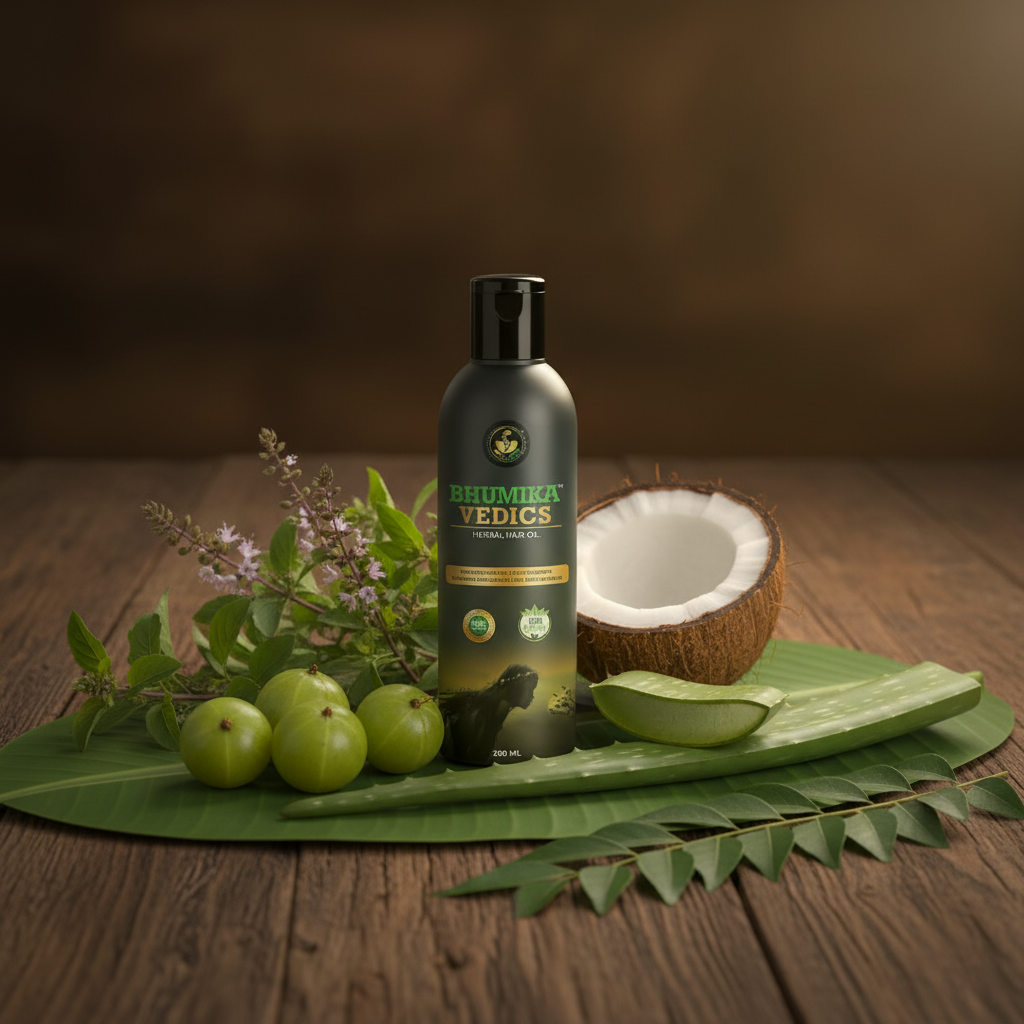
Every Tradition Begins at Home Warm oil on the stove, a handful of herbs simmering in it, a little smoke drifting from the kitchen are the small details that stay with anyone who grew up in an Indian household. Amma sitting someone down on a low stool, parting the hair section by section, working oil into the scalp while talking about the day. Nobody called it a beauty routine. It was just what mothers did, every week, without fail. It wasn't questioned, because it reached her the same way it had reached her own mother. This quiet, everyday ritual is where the story of Bhumika Vedics herbal hair care begins. Not in a lab, but in a kitchen, with a pot of oil on the stove and a family recipe nobody ever bothered to write down. Quick answer: Bhumika Vedics herbal hair care traces back to a Kerala family recipe for hair oil, passed down through generations of Ayurvedic practice. That tradition grew into a full herbal hair care routine that now includes Herbal Hair Oil, Ayurvedic Shampoo, Virgin Coconut Oil, and Skin Care Oil, all built around traditional Indian hair care and Ayurvedic principles. Key takeaways Bhumika Vedics herbal hair care is rooted in a Kerala family recipe for herbal hair oil, practiced across generations. The lineage is connected to a Vaidya, a traditional Ayurvedic healer within the family. The core routine has four products: Herbal Hair Oil, Ayurvedic Shampoo, Virgin Coconut Oil, and Skin Care Oil. The Herbal Hair Oil is currently described as containing 18 selected medicinal herbs, prepared through the kaachiyenna method of slow-cooking herbs into oil. The National Cancer Institute describes Ayurvedic medicine as a traditional Indian medical system used for thousands of years, recognized in the US as complementary and alternative medicine. Results with herbal products vary from person to person, so it's worth talking to a doctor about any specific scalp concern before changing a routine. It All Began with Amma's Recipe A Traditional Hair-Care Ritual Passed Down Through Generations In most families like this, hair oil was never bought off a shelf. It was made at home in small batches, using whatever medicinal herbs were trusted and on hand, following a recipe that usually traced back to a grandmother or a healer somewhere in the family line. Family accounts behind Bhumika Vedics describe a similar path. The lineage is said to go back generations, connected to a Vaidya, a traditional Ayurvedic healer from Kerala, with knowledge passed on quietly within the family rather than taught formally. It was learned by watching, by standing next to a mother during scalp massage and herbal oil preparation, until it could be done without thinking about it. Kerala holds a particular place in this story. The region is widely seen as one of the parts of India where Ayurvedic hair care has stayed alive as an everyday, lived practice rather than something confined to old texts. Herbs like Poovankurunnila and Muyal Cheviyan, largely unknown outside the state, still grow locally and get used the way they always have. This Kerala Ayurvedic tradition of herbal oiling, passed from one generation to the next, is the backdrop this family recipe grew out of, long before anyone thought to turn it into a brand. When Hair Care Was More Than a Product There's a real difference between using a product and following a practice. A product gets bought when someone remembers to. A practice is something people show up for, week after week, because it's part of how a family looks after each other. Amma's oil was never marketed with big promises. It was simply part of a regular, holistic hair care routine, passed down and repeated without needing a slogan to justify it. Nourishment wasn't measured by claims on a label, it was measured by how the scalp felt the next morning. There was something else wrapped into that ritual too. When someone oils another person's hair, it's rarely just about the hair, it's about being looked after. That quiet family practice slowly grew into something bigger, and eventually, into a brand built around the same idea of natural, herbal hair care. Building a Complete Bhumika Vedics Herbal Hair Care Routine Over the years, the home recipe became the foundation for Bhumika Vedics herbal hair care, a brand built around the belief that natural ingredients and traditional Ayurvedic preparation belong in a regular hair wellness routine, without relying on shortcuts. Instead of a single product, the brand grew into a small range of herbal hair care products meant to be used together. Bhumika Vedics Herbal Hair Oil - The Beginning This is where Bhumika Vedics herbal hair care truly started. The Herbal Hair Oil draws on the preparation Amma used at home, the kaachiyenna method, where herbs are slowly cooked into oil rather than mixed in as an afterthought. Bhumika Vedics currently describes its Herbal Hair Oil as containing 18 selected medicinal herbs, each chosen for a reason rooted in Ayurvedic hair care preparation rather than added to pad out an ingredient list. Herbs like Bhringraj, Amla, Hibiscus, and Neem sit alongside rarer Kerala herbs most people outside the region have probably never come across, all picked for how they've traditionally supported scalp care and hair nourishment. The oil is applied as the first step, worked into the scalp through a gentle massage before anything else happens. Full ingredient details are on the Bhumika Vedics Herbal Hair Oil product page. Bhumika Vedics Ayurvedic Shampoo - The Cleansing Step Oiling is only half the picture. What follows matters just as much, and that's the role shampoo plays. Hair oil eventually needs to be washed out, so cleansing naturally becomes the next step. The Bhumika Vedics Ayurvedic Shampoo fills that role, following hair oiling and completing the wash without undoing what the oil just did. The shampoo comes in multiple sizes, including 200 ml and 400 ml, fitting different households and different versions of a natural hair care regimen. It's built to be used alongside the oil, as the second step of one herbal hair care routine, not a separate, unrelated purchase. More details are on the Bhumika Vedics Ayurvedic Shampoo product page. Virgin Coconut Oil - A Traditional Ingredient in Everyday Care Coconut oil has long had a place in everyday hair care across South Indian households, Kerala especially. Long before it became a wellness trend elsewhere, it already sat in the kitchen and on the dressing table in most homes, used for cooking as much as for hair. Bhumika Vedics offers Virgin Coconut Oil both as a standalone product and as part of hair-care combinations, in keeping with how central it already is to natural hair care in the region. It works on its own for a simple scalp massage, or alongside the herbal oil and shampoo, depending on what a person's hair needs. The Bhumika Vedics Virgin Coconut Oil product page has more on how it's made. Skin Care Oil - Extending the Philosophy Beyond Hair Once a brand is built around honest, botanical ingredients, it's natural to look beyond hair alone. Bhumika Vedics lists a Skin Care Oil as part of its wider range, often bundled with hair-care products. It plays a smaller part in this story, since herbal hair care remains the main focus, but the same philosophy of traditional preparation carries over to skin too. The Bhumika Vedics Skin Care Oil product page covers the details. Together, the oil, shampoo, coconut oil, and skin care oil make up the range that grew out of Amma's original recipe. It's worth a look for anyone trying to work out which combination fits their own hair. Looking for a complete herbal hair care routine inspired by traditional Kerala practices? Explore the Bhumika Vedics collection to find products that work together as part of one consistent routine. What Does Herbal Hair Care Mean to Bhumika Vedics? Tradition at the Foundation The philosophy behind Bhumika Vedics herbal hair care traces back to Amma's recipe and the generations before her. Heritage comes first, formula comes second. The knowledge didn't start in a lab, it came from a family that has practiced this herbal oiling tradition for a long time, passed quietly from one generation to the next. Ayurveda and Herbal Ingredients Alongside that family tradition sits Ayurveda itself, a system that has shaped Indian life for thousands of years. The National Cancer Institute describes Ayurvedic medicine as a traditional medical system from India, recognized in the US as complementary and alternative medicine. In India, Ayurveda is regulated and promoted by the Ministry of Ayush, the government body responsible for education, research, and standards around the practice. Bhumika Vedics continues Kerala's tradition of Ayurvedic hair care through its herbal hair care products, adapting the same family formulas to modern manufacturing standards, so a recipe that once lived in one kitchen can reach far more households. Making Traditional Care Practical Today Not everyone has hours to prepare herbal oil the way Amma did. Life today moves faster and routines tend to be shorter. Bhumika Vedics tries to offer that same traditional, natural hair care approach, made a little more practical for a modern routine, while keeping the original philosophy at the center. Conclusion - A Tradition That Continues A pot of oil on a stove and a mother taking the time to care for her family, that's where Bhumika Vedics herbal hair care began, and it's still central to the brand today. From the Herbal Hair Oil that started it all, to the Ayurvedic Shampoo that completes the routine, to the Virgin Coconut Oil and Skin Care Oil that carry the idea further, the range has grown, but the intention hasn't changed. It's still about caring for the body with real, natural ingredients and a little patience. Explore the full Bhumika Vedics herbal hair care range to find the products that fit your own hair care routine. Frequently Asked Questions What inspired Bhumika Vedics' approach to herbal hair care? A family tradition of preparing herbal hair oil at home, passed down through generations, which became the foundation for the brand's range of herbal hair care products. Is Bhumika Vedics based on a traditional family recipe? Yes. Its roots trace back to a family recipe for hair oil, said to be practiced at home long before it became a product. What herbal hair care products does Bhumika Vedics offer? Herbal Hair Oil, Ayurvedic Shampoo, Virgin Coconut Oil, and Skin Care Oil, together forming a traditional-inspired hair care routine. What is included in the Bhumika Vedics hair care routine? The Herbal Hair Oil for scalp nourishment and the Ayurvedic Shampoo for cleansing afterward, with Virgin Coconut Oil as an additional option. How does Bhumika Vedics Herbal Hair Oil fit into a hair care routine? It's the first step, massaged into the scalp before being washed out with a gentle, herbal shampoo. Can Bhumika Vedics Ayurvedic Shampoo be used after hair oiling? Yes. It's positioned as the cleansing step that follows oiling, completing that part of the routine. What is the role of virgin coconut oil in traditional hair care? It has a long association with everyday hair and scalp care across South India, used alone or alongside other herbal hair care products. Does Bhumika Vedics offer skincare products as well? Yes. A skin care oil extends the same natural, ingredient-focused approach beyond hair. Disclaimer: This article covers the traditional use of herbs in hair care, not medical treatment. Ayurvedic hair care as a category relies on herbs chosen for a reason rooted in traditional use, not picked at random. Results vary from person to person, so it's sensible to check with a doctor about any specific scalp concern before changing a routine.
Learn more
Why Does Hair Become Dry, Weak and Brittle? 9 Common Reasons
A simple hair care routine is all it takes to keep your hair healthy. But even that can be frustrating if you have dry, weak and brittle hair. However, dryness and breakage are not caused by just one thing. There are a number of habits, environmental factors and product choices that can strip moisture, weaken the hair shaft and make strands prone to snapping over time. The first step to fixing dry brittle hair is to understand what causes it. Once you know the causes, it’s easier to pick the right hair care products. What Does Dry, Weak and Brittle Hair Look Like? Before understanding the causes, let us try to identify whether you have dry and damaged hair. Common Signs of Dry and Brittle Hair Rough texture that feels coarse to the touch Dull-looking hair with little shine Persistent frizz, even after styling Split ends that keep appearing Hair snapping easily during brushing or combing Difficult detangling, especially when dry Dry ends that feel straw-like Lack of softness and manageability These signs result from a lack of moisture, weakened cuticles or both. Is Dry Hair the Same as Damaged Hair? Dry hair and damaged hair are often mentioned together, but they are not exactly the same. Dry hair is hair that lacks moisture and conditioning. It feels rough and appears dull, but the structure may still be okay. Damage means the hair structure is weakened. The cuticle is raised or cracked, Keratin proteins are compromised and strands break more easily. If dryness is left untreated, it can lead to damage over time. Once the hair is damaged, it’s more prone to drying out. They both need to be gently cleansed, regularly nourished and protected from further stress. 9 Common Reasons Why Hair Becomes Dry, Weak and Brittle 1. Excessive Heat Styling Many hair routines use hair straighteners, curling irons and blow dryers as common tools. They are often used at high temperatures and can cause serious damage. Repeated exposure to high heat can alter the structure of the hair shaft, damage the cuticle and increase dryness and breakage. The result is rough texture, split ends or more breakage when you comb your hair. Wet hair that is styled with high heat is even more vulnerable. Water within the shaft can turn to steam and cause internal damage, sometimes called 'bubble hair'. This pattern, over weeks and months, results in dry, brittle, breakable hair, says Pubmed research. Regular oiling with a nourishing hair oil and protective hair care practices can help to lubricate and condition the hair. 2. Washing Hair Too Frequently If you shampoo too often, you strip away the natural oils that protect and soften the hair. This is made worse by very hot water and harsh cleansers. Dermatologists usually recommend washing based on how oily or dirty the scalp feels. Most people need it two or three times a week. For those with dry, coarse or curly hair, once a week or once every two weeks may work better. Some people with fine or oily hair need to wash more often, but even daily shampooing can be drying for many. Consider using a mild Ayurvedic shampoo. Bhumika Vedics Ayurvedic Shampoo is made using the traditional 7-Day Kashayam process and Ayurvedic herbs. It cleanses without stripping too much, so it’s great for everyday use on dry or damaged hair. 3. Using the Wrong Hair-Care Products Some shampoos, conditioners and styling products have strong surfactants, alcohols or fragrances that dry out strands. Others are not formulated for textured or chemically treated hair. Using products not suited to scalp and hair needs can increase dryness and breakage. Use a gentle cleansing and nourishing routine to avoid unnecessary dryness. Bhumika Vedics Ayurvedic Shampoo is suitable for everyday use and contains herbal ingredients to care for the scalp and promote healthy-looking hair. It works well in a routine to minimise dryness and keep strands soft and manageable. 4. Chemical Treatments and Hair Coloring Bleaching, colouring, straightening, and perming hair use strong chemicals. NCBI notes that the processes alter the internal structure of the hair or cut open the cuticle to change colour or shape. Due to repeated chemical treatments, hair strands become more fragile, porous and susceptible to breaking. The cuticle no longer lies smooth on color-treated hair, making it feel drier and look duller. For repeatedly processed hair, regular nourishment and gentle cleansing become especially important. Regular oiling & deep conditioning & using mild shampoos will help in retaining moisture & reducing further damage. 5. Not Giving Your Hair Enough Nourishment Dry and rough hair often lacks regular conditioning. If you skip oil treatments, avoid conditioners, and shampoo, strands feel dry and less conditioned. Ill-conditioned hair is characterised by a lack of softness, rough ends and dry-feeling strands. If you don't oil, the cuticle stays up, resulting in friction, tangling and breakage. Ayurvedic hair oil has been used for centuries to enhance scalp nourishment and hair care. If you're searching for a hair oil for brittle hair, make regular hair oiling, gentle cleansing and less heat a part of your haircare routine. Bhumika Vedics Herbal Hair Oil has 18 chosen medicinal herbs. It moisturises the scalp and nourishes the hair, making it a great option for those with dry and damaged hair. 6. Sun, Heat, Pollution and Environmental Exposure Hair is affected by sun exposure, outdoor heat, pollution, humidity and chlorinated or salt water. UV rays can degrade keratin and dull colour. Pollution particles can collect on the scalp and strands. Chlorine and salt dry hair out, making it feel rough. After long exposure to the sun, swimming or pollution, your hair may start to feel a lot rougher. Usually the ends are the first place that shows. This eventually results in breakage and split ends. Regular oiling, gentle cleansing and a good conditioning routine are a simple defence. This helps build a barrier and restores lost moisture. 7. Poor Nutrition and Nutrient Deficiencies Sufficient protein and vital nutrients are necessary for normal hair growth. Certain nutritional deficiencies, especially if severe, can lead to changes in hair and increased shedding. Hair is mostly made of a protein called keratin. Very low diets in protein, iron, zinc, biotin and essential fatty acids have been linked with hair loss and changes in texture in some cases. A healthy diet can help keep your hair healthy overall. 8. Stress and Lifestyle Habits In some people, prolonged or significant stress can affect the hair growth cycle and may result in more shedding. Hair falling out is more directly related to stress than to hair shafts becoming brittle. Lifestyle factors such as smoking, excessive alcohol consumption and lack of hydration can affect scalp health and hair quality. Managing stress and sticking to healthy habits will help your hair over time. 9. Underlying Scalp or Health Conditions Sometimes, dry, weak, brittle hair is related to scalp issues or health problems. Dandruff, seborrheic dermatitis, hormonal changes and thyroid imbalances may affect the texture and strength of hair. And if good care doesn’t correct hair problems, it might be worth checking with a health care provider. By tackling the underlying causes, hair care routines can be improved How to Care for Dry, Weak and Brittle Hair Naturally Start With Gentle Cleansing The first step in the care of dry brittle hair is gentle shampoo. Harsh cleansers remove oils, increasing dryness. Bhumika Vedics Ayurvedic Shampoo is prepared by traditional Ayurvedic methods, including a 7-day Kashayam process. It contains herbal ingredients that cleanse gently while supporting scalp care and nourishment. This is a perfect addition to an everyday hair-care routine for those seeking natural hair care. There is no single brittle hair treatment. The right approach depends on what is creating the dryness, weakness or breakage. Why Choose Ayurvedic Hair Care for Dry and Brittle Hair? Ayurveda’s approach to hair health is holistic. It doesn’t just look at the strands but also the scalp, lifestyle and long-term habits. The traditional Ayurvedic approach focuses on prevention and balance Herbal ingredients help to nourish the scalp and promote healthy-looking hair Consistent hair-care products create better results over time. Gentle daily care lessens cumulative damage Ayurvedic heritage of Kerala utilises centuries of plant-based knowledge Bhumika Vedics builds its prestige on natural ingredients, Ayurveda and the traditional hair-care heritage of Kerala. This makes Bhumika Vedics products a perfect fit for those looking for herbal hair care products and ayurvedic hair care products. Bhumika Vedics Hair Care for Dry, Weak and Brittle Hair Bhumika Vedics Herbal Hair Oil Great for hair nourishment and a regular oiling of the scalp. This ayurvedic hair oil for dry hair is a combination of 18 medicinal herbs that help condition strands and support the scalp. → [Shop Herbal Hair Oils] Bhumika Vedics Ayurvedic Shampoo Ideal for gentle cleansing and as part of a regular hair care routine. This Ayurvedic shampoo for dry hair cleans without over-drying and is well suited to a regular hair-washing routine. → [Buy Ayurvedic Shampoo] Ayurvedic Shampoo + Herbal Hair Oil Combo Best for those who wish for a simple two step hair-care routine as per Ayurveda. The oil and shampoo together create a simple 2-step routine of oiling and gentle cleansing. → [Shop Combo] How to Build a Simple Ayurvedic Hair-Care Routine Step 1: Oil Your HairUse Bhumika Vedics Herbal Hair Oil. Massage into the scalp and through your hair lengths. Care more for dry ends and weak spots prone to breaking. Step 2: Allow the Oil to Nourish the Hair and ScalpFollow the product directions for the amount of time to leave the oil on. If your scalp takes it well, some people like to leave hair oil for a few hours before washing. Step 3: Cleanse With Ayurvedic ShampooGo for Bhumika Vedics Ayurvedic Shampoo. Focus on the scalp and wash gently. Do not scrub too hard. Let the lather run down the lengths. Step 4: Reduce Heat and Rough HandlingLimit heat styling and tight hairstyles and use a wide-tooth comb on damp hair. This lets the hair care routine progress effectively. Step 5: Stay ConsistentHair care is not a treatment; it is a process. Regular oiling and gentle washing over the weeks will be better than occasional intensive care. How to Prevent Dryness, Breakage and Split Ends Minimise heat styling and use lower temperatures Do not wash your hair with hot water Do not overwash. Follow a schedule that matches hair type Oil regularly with herbal hair oil for damaged hair Use a gentle shampoo for dry and damaged hair Don’t brush aggressively, particularly when your hair is wet. Reduce chemical treatments and give hair time to recover Protect hair from sun, pollution, and chlorine water Stick to a regular hair-care routine that involves gentle cleansing and nourishment When Should You See a Professional? It is wise to seek professional advice if: Fast or intense hair breakage Significant hair loss takes place Continued scalp issues such as itching, flaking or redness The condition remains despite better hair care Frequently Asked Questions What causes dry, brittle hair?Common causes include overuse of heat styling, over-washing, wrong products, chemical processing, lack of conditioning, environmental factors, poor diet, stress and underlying health conditions. How can I fix dry and damaged hair?Begin with mild cleansing, frequent oiling, less heat, less chemical processing and constant care. You can include Ayurvedic hair care products in this routine. Which oil is best for brittle hair?There’s no one best oil for all types of brittle hair. A good herbal oil can help condition the strands and encourage a regular scalp-care ritual. How often should I wash dry hair?People with fine or oily hair may need more frequent washing, while dry, thick, curly or textured hair may need less frequent shampooing Can Ayurvedic shampoo help with hair breakage?Use a gentle Ayurvedic shampoo for cleansing, as harsh cleansing can cause more damage. It helps in a brittle hair treatment regimen combined with oiling and protective habits. Give Your Hair the Nourishment It Deserves With the right understanding of causes and a consistent routine, strands can be softer, stronger and more resilient. Bhumika Vedics provides Ayurvedic hair care products based on the ancient hair care heritage of Kerala. The Herbal Hair Oil and Ayurvedic Shampoo are a two-step routine for effortless, gentle cleansing and regular nourishment. → [Explore Bhumika Vedics Hair Care Range]
Learn more
Ventha Velichenna vs Cold-Pressed Coconut Oil: Which Is Better for Baby & Skin?
If you've ever stood in front of a shelf full of coconut oils trying to figure out which one is actually right for your baby, you're not alone. Two names keep coming up: Ventha Velichenna and cold-pressed coconut oil. Both are natural and coconut-based, but they're not the same thing, and the difference matters more than you'd expect when it comes to a newborn's delicate skin. This guide breaks down Ventha Velichenna vs cold-pressed coconut oil in plain, simple language, so parents know before choosing a baby massage oil. At Bhumika Vedics, we make our Ventha Velichenna using authentic, traditional methods, and we've put together this comparison to help you pick the right oil with confidence instead of guesswork. Note: every baby's skin is different. If your little one has eczema, allergies, or any diagnosed skin condition, do check with your pediatrician before introducing a new oil. Quick Verdict: Which Coconut Oil Should You Choose? If you're short on time, here's the quick answer: Best overall choice for babies: Ventha Velichenna Best for baby massage: Ventha Velichenna Best for sensitive skin: Ventha Velichenna (thanks to its gentle, slow-heated preparation) Best for traditional Ayurvedic baby care: Ventha Velichenna, hands down Best for general, everyday multipurpose use: Cold-pressed coconut oil If you're specifically looking for the best coconut oil for baby skin, Ventha Velichenna is built for that job. Cold-pressed coconut oil is a solid, honest oil too, often marketed alongside virgin coconut oil or refined coconut oil, just not one that was traditionally made with baby massage in mind. Here's a closer look at how they compare. Ventha Velichenna vs Cold-Pressed Coconut Oil: Side-by-Side Comparison Factor Ventha Velichenna Cold-Pressed Coconut Oil Processing method Slow-heated, traditional method Pressed at low temperature without heat Texture Slightly thinner, easily absorbed Slightly heavier Daily baby massage Ideal, designed for this purpose Good, but not purpose-built Baby skincare Excellent, gentle on delicate skin Suitable for general use Sensitive skin Well-suited, soothing Works, but can feel heavy for some babies Everyday use Great for babies and family skincare Great for cooking, hair, and skin Traditional preparation Yes, rooted in Ayurveda No, modern extraction method Best suited for Newborns, infants, daily massage rituals General skincare, multipurpose household use Instead of just listing features side by side, here's how to actually choose based on your situation. For newborn care National Center for Biotechnology Information (Infant Skin Physiology Review) reports how newborn skin is thinner, more porous, and far more reactive than adult skin. This is where Ventha Velichenna tends to be the preferred choice. It's traditionally prepared specifically for infants, passed down through generations of Ayurvedic baby care practices. Cold-pressed coconut oil (and variants like virgin coconut oil) are safe too, but they weren't designed with a newborn's skin barrier specifically in mind. For sensitive baby skin If your baby has sensitive skin (easily irritated, prone to dryness or rashes), Ventha Velichenna's gentler, slow-prepared nature usually feels softer during absorption. Cold-pressed coconut oil is still natural, but its richer texture can feel heavier on very sensitive skin. For daily baby massage Daily massage is more than a skincare step. It's bonding time, says UNICEF. Ventha Velichenna is the traditional go-to across most Indian households, especially in Kerala, where it's been part of baby care routines for generations, and it's light enough for daily use without leaving skin feeling greasy. For natural baby skincare Both oils are natural, but if you want something rooted in Ayurvedic baby care (natural in philosophy and process, not just in the ingredient list) Ventha Velichenna edges ahead. Ventha Velichenna Benefits: Why More Parents Are Choosing It There's a reason this oil keeps showing up in conversations between moms, grandmothers, and pediatric skincare communities. It isn't marketing. It's tradition backed by real experience. Here's a closer look at the Ventha Velichenna benefits parents care about most: Traditional preparation: Ventha Velichenna isn't just coconut oil with a nice name attached to it. It's prepared using a slow, time-tested method that's been part of South Indian households for generations, and that patience shows up in the final texture and how easily it absorbs. Made for daily baby care: Unlike general-purpose oils, Ventha Velichenna was essentially born out of baby care needs. It's meant for everyday use on delicate skin, without causing irritation or buildup. Real skin nourishment: Parents often say their baby's skin feels noticeably softer and less dry with consistent use. It's meant to support the skin's natural hydration and barrier over time, as mentioned by NCBI, not just deliver a passing "feel good" moisturizing effect. A trusted choice for baby massage: Baby massage isn't only about the oil. It's about the ritual, the touch, and the calm it brings to both baby and parent. Ventha Velichenna has been the quiet companion to that ritual for a long time, which is part of why it remains a trusted choice for baby massage across generations. If you're ready to bring this into your baby's routine, explore Bhumika Vedics' Ventha Velichenna here. And while you're at it, know that Bhumika Vedics doesn't stop at baby oil. We also make herbal hair oil, herbal shampoo, and skincare oils for moms, so you can extend the same natural, traditional care to yourself while you're caring for your little one. When Cold-Pressed Coconut Oil Is the Better Option To be fair, cold-pressed coconut oil isn't a lesser product. It's simply a different one, and it has its own strengths. When minimal processing is preferred Cold-pressed oil is extracted without heat, which some parents prefer purely from a "less processing" standpoint. It retains a lot of its raw nutritional properties, similar to virgin coconut oil. For everyday skincare beyond baby care If you're looking for a multipurpose oil for the whole family (moisturizer, hair oil, even light cooking), cold-pressed coconut oil is versatile and reliable. For multipurpose family use Not every household wants a dedicated baby oil and a separate everyday oil. Cold-pressed coconut oil can comfortably serve both roles, even if it's not purpose-built for infant skin. So the honest answer: it depends on whether you want a dedicated, traditional baby oil or a flexible, everyday coconut oil. Which Oil Gives Better Value for Daily Baby Care? Value isn't just about the price per bottle. It's about what you're actually getting for your baby's skin over time. Daily use: Ventha Velichenna is formulated with daily massage in mind, so you're not compromising on comfort for the sake of routine. Versatility: Cold-pressed coconut oil wins here if you want one oil for the entire family. Long-term usability: For infants specifically, Ventha Velichenna tends to show more consistent results over weeks of regular use. Traditional care preferences: If your family follows Ayurvedic practices, Ventha Velichenna aligns naturally with that approach. Overall experience: Most parents report that Ventha Velichenna feels lighter during massage and absorbs without excessive stickiness, useful when you're massaging a wriggly baby daily. If your priority is baby-specific care, Ventha Velichenna generally offers better long-term value. If your priority is one oil that serves the whole household, cold-pressed coconut oil pulls ahead. Common Mistakes Parents Make When Choosing Baby Massage Oil Even well-meaning parents get this wrong sometimes. Here are the most common slip-ups: Choosing only based on price The cheapest oil isn't always the gentlest one for a baby's skin. Ignoring baby's skin type NHS says that a baby with dry, sensitive skin needs different care than one with normal skin, yet many parents grab whatever's available. Not considering traditional preparation How an oil is made matters as much as what it's made from. Heat, processing time, and herbal preparation all affect how it behaves on skin. Assuming all coconut oils are the same Refined coconut oil, cold-pressed coconut oil, and traditionally prepared oils like Ventha Velichenna are not interchangeable. They absorb differently and serve different purposes. Avoiding these mistakes can make a real difference in your baby's comfort during and after massage. Our Recommendation Choose Ventha Velichenna if you: Prefer traditional Ayurvedic baby care. Want an oil specifically for daily baby massage. Are looking for a nourishing, gentle option for baby skincare. Value time-tested preparation methods over modern shortcuts. Choose cold-pressed coconut oil if you: Prefer a minimally processed oil. Need a versatile oil for general skincare across the family. Want an everyday, multipurpose coconut oil rather than a baby-specific one. Neither choice is "wrong". It genuinely comes down to what you're using it for. If you'd like to try Bhumika Vedics' traditionally prepared Ventha Velichenna for your baby, browse our baby care range here. Frequently Asked Questions Is Ventha Velichenna better than cold-pressed coconut oil for babies? For massage and daily skincare, yes. It's traditionally prepared with infant skin in mind. Which is better: Ventha Velichenna or cold-pressed coconut oil? For babies, Ventha Velichenna wins. For everyday multipurpose family use, cold-pressed coconut oil works just as well. Can I use cold-pressed coconut oil for baby massage instead? Yes, it's safe for most babies. It just isn't purpose-built the way Ventha Velichenna is, so it can feel slightly heavier during massage. Is Ventha Velichenna safe for newborn skin? Yes, and it's traditionally used for newborns across South Indian households. As always, patch-test any new oil and consult your pediatrician if your baby has a diagnosed skin condition. How often should I massage my baby with Ventha Velichenna? Most families use it once or twice daily, though this can vary based on your baby's skin and your pediatrician's advice. Final Verdict: Which Coconut Oil Is Worth Choosing? If your main goal is baby massage and baby skincare, Ventha Velichenna is the more purpose-built, traditional, and gentle option. It's designed with infant skin in mind, right down to how it's prepared. If you're after a multipurpose family oil that goes beyond baby care, cold-pressed coconut oil is a dependable, minimally processed choice. For most parents specifically asking "which is the best coconut oil for baby skin," Ventha Velichenna comes out ahead simply because it was made for exactly that purpose: daily, gentle, traditional baby care. At Bhumika Vedics, our Ventha Velichenna is prepared following authentic traditional methods, made for parents who want nothing but the gentlest, safest care for their little one's skin. And baby care doesn't have to stop there. Bhumika Vedics also offers a range of herbal hair oil, herbal shampoo, and skincare oils for moms, so the whole family can enjoy the same natural, traditional care in one place. Whether it's your baby's first massage or your own daily self-care ritual, Bhumika Vedics brings tradition and nourishment together, just like it's always been done. Ready to start? Shop Bhumika Vedics Virgin Coconut Oil and baby care range and give your little one the traditional, gentle care they deserve.
Learn more
Best Ayurvedic Skincare Oil for Glowing Skin: A Complete Guide to Choosing the Right Herbal Formula
Selecting the best Ayurvedic skin care oil is not just about selecting a product that has good packaging or marketing claims. In Ayurveda, handpicked botanicals, nourishing carrier oils and regular skincare routines are the key to keeping healthy, glowing skin. Many people are opting for natural oils for skin that glows these days, and herbal formulations can be a wonderful addition to a well-rounded skincare regimen without the use of synthetic components. Traditional Ayurvedic facial oils work by combining skin hydration, skin nourishment and skin barrier support to assist in achieving a naturally glowing complexion over time. Whether you are looking for the best Ayurvedic skincare oil for dry skin, are looking to explore an Ayurvedic oil for radiant and healthy skin or just want to build a more natural skincare routine, understanding the ingredients is the first step towards making an informed decision. What Is the Best Ayurvedic Skincare Oil? The best Ayurvedic skincare oil is a balanced herbal formulation of traditional botanicals such as Manjishta, Haridra (turmeric), Yashti (licorice), Rakta Chandana (red sandalwood), vetiver, rose, and Kumkumadi in a nourishing carrier oil. These ingredients have been traditionally used in Ayurveda to encourage healthy-looking, hydrated and glowing skin. The foundation of Ayurvedic skincare is that many herbs are combined to benefit the skin as a whole. So when you compare products, consider these things: Transparent ingredient list Authentic Ayurvedic herbs High-quality carrier oils Manufacturing quality Suitability for your skin type Which Ayurvedic Oil Is Best for Glowing Skin? No single Ayurvedic oil is suitable for all. The most effective will vary based on the type of skin and the ingredients and herbal formulation that you prefer. Bhumika Vedics Skin Care Oil contains Manjishta, Kumkumadi, Yashti, Turmeric, Liquorice and nourishing carrier oils. High-quality Ayurvedic oils for skin are often selected to help maintain healthy-looking skin and promote a radiant complexion. What are the common herbs found in Ayurvedic skincare oils for healthy-looking skin The herbs that are usually present in Ayurvedic oils are often blended with nourishing oils like Nalikera Taila (coconut oil) to help with the spreadability and to support the natural moisture barrier in the skin. They are: Ayurvedic Herb Botanical Name Traditional Ayurvedic Role Manjishta Rubia cordifolia Support a clear and balanced complexion Haridra (Turmeric) Curcuma longa Valued for maintaining healthy-looking skin Rakta Chandana Pterocarpus santalinus Used to soothe and refresh the skin Yashti (Liquorice) Glycyrrhiza glabra Associated with an even-looking complexion Usira (Vetiver) Chrysopogon zizanioides Valued for its cooling and refreshing properties Sata Patrika (Rose) Rosa centifolia Used to refresh and hydrate the skin Kumkumadi Classical Ayurvedic formulation Used for facial care and skin nourishment Products that clearly list their herbal ingredients make it easier to know if they contain botanicals that are traditionally used for skin nourishment, skin hydration, and a natural skincare routine. How Do Ayurvedic Skincare Oils Work? The primary uses of Ayurvedic skincare oils are to moisturise the skin, to strengthen the skin barrier and to supply botanicals that have been traditionally used to nourish the skin. The products' effectiveness depends on the entire formulation, regular use and specific skin type. A well-formulated Ayurvedic oil for skin may help in the following: Improved skin hydration Softer skin texture Better skin nourishment Comfortable-feeling skin Support for the skin's natural barrier Choosing the Best Ayurvedic Skincare Oil for Your Skin Type The best Ayurvedic skincare oil will depend on your skin type, concerns, and the ingredients you prefer. Traditional herbal oils are meant to promote overall skin health. However, selecting a formulation that suits your skin’s needs can improve your skin care experience. Skin Type What to Look For Traditional Ayurvedic Ingredients Dry Skin Deep nourishment and long-lasting moisture Coconut Oil, Kumkumadi, Yashti, Vetiver Normal Skin Balanced hydration and skin maintenance Manjishta, Rose, Turmeric Combination Skin Lightweight yet nourishing formulation Manjishta, Vetiver, Rose Sensitive Skin Simple formulations with soothing botanicals Rakta Chandana, Rose, Vetiver Note: Those with sensitive skin should always do a patch test before using any new skincare product. If you have dry skin and are looking for the best Ayurvedic skincare oil, you’ll want formulations like Bhumika Vedics Skin Care Oil that contain nourishing carrier oils and herbs that have been traditionally used to help support the skin barrier and hydrate the skin. How to Use Ayurvedic Skincare Oil Apply a few drops of Ayurvedic skin care oil on clean skin and massage it gently in an upward circular motion. Used regularly as part of a natural skincare routine can help keep skin hydrated and nourished. Always follow the directions that accompany the product you select. Step-by-Step Guide Clean your face with a mild cleanser. Pat skin dry with a soft towel. Add 2-4 drops of the oil. Warm the oil in your palm. Gently massage in upward and outward circular motions. Allow the oil to absorb before applying sunscreen (morning) or leaving it overnight (evening), depending on the product's directions. Best Practices Use consistently rather than excessively. Apply to slightly damp skin if recommended. Store the oil away from direct sunlight. Perform a patch test before first use. Depending on your preference and the product instructions, many people use a natural oil for glowing skin on a daily basis as part of their morning or evening skincare routine. Ayurvedic Skincare Oil vs Face Serum: What's the Difference? In essence, Ayurvedic skincare oils are mainly used to nourish the skin and to aid the skin barrier, whereas serums are typically formulated with concentrated cosmetic ingredients that address specific skincare concerns. Feature Ayurvedic oil for skin Face Serum Primary Purpose Skin nourishment and hydration Targeted cosmetic concerns Base Herbal oils and botanicals Water- or gel-based formulas Traditional Use Rooted in Ayurvedic skincare Modern cosmetic science Skin Barrier Support Excellent Depends on formulation Massage-Friendly Yes Usually not. Common Mistakes When Using Herbal Facial Oils Some of the biggest mistakes are using too much oil, not patch testing, applying to skin that isn’t clean, and expecting overnight results. Avoid these common errors Using large quantities of oil Using products without reading the ingredients list Not doing a patch test Disregarding your skin type Expecting to see instant changes Skipping sunscreen in your daily routine A balanced skincare routine, healthy lifestyle and consistent product use maintain healthy-looking skin. What Makes a Good Ayurvedic Skincare Oil? A genuine Ayurvedic skincare oil will contain true botanical ingredients, will be clearly formulated, will contain a nourishing carrier oil, and will have clear instructions on how to use it. The best herbal skincare oil for women needs to be about quality ingredients, not marketing hype. As you look at an Ayurvedic facial oil, here are some questions to ask yourself: Does it list ingredients clearly? Do the herbs have traditional recognition in Ayurveda? Is the carrier oil safe to use on the face? Are directions clear and simple to follow? Are claims proportionate and reasonable? One such example is Bhumika Vedics Skin Care Oil, a formulation of traditional botanicals like Manjishta, Haridra (Turmeric), Rakta Chandana, Yashti, Usira (Vetiver), Rose, Coconut Oil and Kumkumadi. The natural oil for glowing skin daily is not based on one ingredient but is a holistic approach to nourish the skin as per Ayurveda. Key Takeaways Ayurvedic skincare oils are created to support healthy-appearing skin with traditional botanical formulations and nourishing carrier oils. By understanding the list of ingredients, choosing the formulation that suits your skin type and using it regularly as part of a natural skincare routine, you can select the best Ayurvedic skincare oil. Before Choosing an Ayurvedic Skincare Read the whole ingredient list. ✔ Use popular Ayurvedic herbs like Manjishta, Turmeric, Yashti, Vetiver, Rose and Kumkumadi. ✔ Purchase products from reputable manufacturers. ✔ Apply according to the recommended directions. ✔ Always do a patch test before regular use. Frequently Asked Questions Which Ayurvedic oil is best for glowing skin? The best Ayurvedic skin care oil is one which blends traditional herbs like Manjishta, Haridra (Turmeric), Yashti, Rakta Chandana, Vetiver and Kumkumadi in a nourishing carrier oil. Which one is best depends on your skin type and skincare goals. Can I use a natural oil for glowing skin daily? Most herbal facial oils are designed for daily use, but it will depend on the oil and the type of skin. Follow the manufacturer's instructions and see how your skin reacts. Is Ayurvedic skincare oil suitable for dry skin? Many formulas contain nourishing carrier oils such as coconut oil as well as herbs traditionally used for skin hydration, making them a popular choice for those looking for the best Ayurvedic skincare oil for dry skin. How do I use Ayurvedic skincare oil? Add a few drops onto the skin of the face, massage gently and let the oil be absorbed. Before using for the first time, perform a patch test and follow the directions on the product. What ingredients should I look for in an Ayurvedic facial oil? An Ayurvedic facial oil should contain the following traditional Ayurvedic botanicals: Manjishta, Haridra (Turmeric), Yashti (Liquorice), Rakta Chandana (Red Sandalwood), Vetiver, Rose, Coconut Oil and Kumkumadi. Ready to Use Ayurvedic Oil for Radiant and Healthy Skin? The best Ayurvedic skincare oil is all about knowing the ingredients, not just the claims of the product. Time-honoured Ayurvedic botanicals like Manjishta, Haridra (Turmeric), Rakta Chandana, Yashti, Vetiver, Rose, Coconut Oil and Kumkumadi have been used in herbal skincare formulations to nourish the skin, hydrate it and impart a natural glow. When choosing an oil to use for glowing skin, an ayurvedic oil for radiant and healthy skin or the best herbal skincare oil for women, ensure that the oil has a clear ingredient list, contains a completely authentic herbal formulation, and has clear instructions on how to use it. These principles are reflected in multi-herb Ayurvedic formulations by reputed brands such as Bhumika Vedics, which can be considered as part of a well-rounded, natural skincare routine.
Learn more
Coconut Oil vs Herbal Oil: Which Is the Best Oil for Hair Fall & Growth?
Hair fall is one of the most common hair concerns today. Stress, pollution, poor nutrition, hormonal changes and overstyling contribute to more hair loss than normal, which can affect your confidence and overall hair health. As experts who work with clients with various hair problems every day, we know that choosing the best oil for hair fall can be confusing. With so many products on the shelf, it is natural to wonder if plain coconut oil is enough or if hair oils with Ayurvedic herbs would actually give better results. Coconut oil has been trusted for generations for its moisturising and conditioning properties. Ayurvedic hair oils take things a step further by combining coconut or other carrier oils with Ayurvedic herbs like Bhringraj, Amla, Hibiscus, Fenugreek, Brahmi and Curry Leaves to deliver targeted support for scalp health and hair strengthening: exactly the blend you'll find in Bhumika Vedics Herbal Hair Oil. In this guide, we compare both options and help you choose the natural hair growth oil that truly suits your needs, such as hair nourishment, scalp care, root strengthening and healthy hair growth. By the end, you'll know exactly what deserves a spot in your hair care routine. Why Hair Fall and Slow Hair Growth Happen? Understanding why hair falls out is the first step toward fixing it. Losing a little hair daily is normal, but excessive loss needs attention. Common Causes of Excessive Hair Fall Hair fall can result from genetics, hormonal imbalance, nutritional deficiencies, stress, illness or excessive heat styling. Tight hairstyles, frequent colouring and harsh chemical treatments weaken hair strands and lead to breakage. According to the American Academy of Dermatology, losing about 50-100 hairs a day is considered normal. How Scalp Health Affects Hair Growth A dry, irritated scalp or one affected by dandruff weakens hair roots over time. Regular oil massage helps to keep the scalp hydrated and improves blood circulation, thereby creating a better environment for the hair follicles to function efficiently. This is the basic principle behind every Bhumika Vedics formulation. The Role of Nutrition and Lifestyle in Hair Health Hair is a mirror of overall health. A low-protein, low-iron, low-zinc, low-vitamin D, or low-essential-fatty-acid diet can cause thinning and slower growth. Also, stress and lack of sleep interfere with the natural hair growth cycle. Long-term results come from combining a good diet with a consistent hair nourishment oil and a disciplined hair growth routine. What Is Coconut Oil and How Does It Help Hair Growth and Hair Fall? Coconut oil is one of the most well-researched natural oils for hair care and has been a go-to for centuries thanks to its light texture and ability to penetrate the hair shaft. Traditional Uses of Coconut Oil for Hair Care Families have been using coconut oil for generations in weekly oil-massage rituals to condition hair and combat dryness from frequent washing and environmental exposure. Scientifically Proven Coconut Oil Benefits for Hair Another of the best coconut oil benefits for hair is that it reduces protein loss in both damaged hair and healthy hair. Coconut oil is loaded with a unique blend of fatty acids that can penetrate the hair shaft more effectively and is especially beneficial for dry, rough or chemically treated hair, according to the Journal of Cosmetic Science. Is Coconut Oil Effective for Dry, Damaged, and Frizzy Hair? Coconut oil is a great deep conditioning treatment, smoothing the hair cuticle, making it softer and reducing frizz. Does coconut oil help with hair fall? To an extent, it does take care of breakage due to dryness, but it can’t fix underlying issues like weak roots, dandruff or scalp imbalance on its own. This is where a targeted herbal formulation is important. What Is Herbal Oil and Why Is It Popular for Hair Fall Control? Ayurvedic hair oil is prepared with nourishing base oils and carefully selected Ayurvedic herbs that work on the scalp and hair in multiple ways at once: the philosophy behind every bottle of Bhumika Vedics Hair Oil. The Ayurvedic Approach to Hair Growth and Scalp Care Ayurveda teaches holistic hair care, including nourishing the scalp, strengthening the roots and restoring balance, rather than just treating symptoms. When searching for the best Ayurvedic hair oil for hair growth, many people now choose a multi-herb blend over a single-ingredient oil for exactly this reason. Key Herbal Ingredients Used in Ayurvedic Hair Oils Quality hair oils with Ayurvedic herbs are formulated with herbal ingredients for hair growth, such as: Bhringraj to strengthen hair roots Amla for antioxidant-rich scalp nourishment Hibiscus to condition hair and reduce dryness Fenugreek to improve scalp moisture Brahmi to calm the scalp Curry Leaves to nourish hair follicles naturally Each ingredient contributes different nutrients that work together to improve overall scalp care and support visibly stronger hair. Benefits of Herbal Oil for Hair Fall, Dandruff, and Thinning Hair Herbal formulations offer more than plain oils ever can. With regular use, they support hair strengthening, dandruff control, scalp nourishment and healthier-looking hair, making Ayurvedic hair oil, particularly a trusted blend like Bhumika Vedics, a more complete solution for people juggling multiple hair concerns at once. Coconut Oil vs Herbal Oil: Side-by-Side Comparison for Hair Fall and Hair Growth Feature Coconut Oil Herbal Oil Ingredients Pure coconut oil Coconut or carrier oil blended with Ayurvedic herbs Hair Fall Control Helps reduce breakage Supports stronger roots and reduces hair fall Hair Growth Support Maintains healthy hair Nourishes follicles with multiple herbal ingredients Scalp Health Moisturises dry scalp Nourishes, soothes and balances the scalp Dandruff Management Limited support Formulated with herbs that help manage dandruff Ingredients and Nutritional Profile The moisturising base of coconut oil is enhanced further in hair oils with Ayurvedic herbs, which combine it with a blend of herbs that actively promote healthy hair growth and scalp maintenance. Which Oil Is Better for Hair Fall Control? Coconut oil mainly helps reduce hair fall caused by dryness and breakage. Ayurvedic hair oil goes a step further, nourishing the scalp and strengthening weak hair roots at the source. Which Oil Supports Faster and Healthier Hair Growth? Healthy hair growth needs strong follicles and a healthy scalp. Herbal ingredients add the nutrients needed to support this as part of a complete hair growth routine, which is why formulations are designed around root-to-tip nourishment, not just surface conditioning. Comparing Scalp Health Benefits Coconut oil's moisturising effect works well on dry, irritated scalps. Herbal oils offer more complete scalp care by combining anti-inflammatory and nourishing botanicals in a single formula. Which Oil Works Better for Dandruff and Scalp Irritation? Coconut oil helps reduce the dryness that causes flakes, but herbal oils containing ingredients like neem, fenugreek, or bhringraj, found in Bhumika Vedics Herbal Oil, offer far more complete dandruff control as part of a full scalp care routine. What Do Hair Care Experts Say About Coconut Oil and Herbal Oil? If your main concern is hair fall from weak roots, hair oils with Ayurvedic herbs are generally the more effective choice overall. If you're dealing with excessive thinning, weak roots or recurring dandruff, a hair oil for hair strengthening with proven herbal ingredients, such as Bhumika Vedics, tends to be the better long-term solution. As experts working with customers at every stage of hair fall, we usually recommend matching your oil to your primary concern rather than relying on a one-size-fits-all approach. Consistent oil massage, a balanced diet, gentle cleansing and a healthy lifestyle all work together with the right formulation to improve long-term hair health. Which Oil Supports Better Hair Growth? Healthy hair growth depends on strong follicles, a healthy scalp and proper circulation. While no oil can instantly grow new hair, a natural hair growth oil can reduce breakage and support healthier-looking growth over time. Regular scalp massage keeps the scalp moisturised and may stimulate the tissue beneath it, encouraging thicker-looking hair. Does herbal oil help hair growth? It's one of the most common questions we hear. Individual results vary, but regular use of an Ayurvedic hair oil formulated with Ayurvedic ingredients like Bhringraj, Amla, Hibiscus, Fenugreek, Brahmi and Curry Leaves, all present in Bhumika Vedics Hair Oil, nourishes the scalp, strengthens roots, and, with consistent use, can support thicker, healthier-looking hair as part of a complete hair care regimen. Powerful Ayurvedic Herbs That Help Reduce Hair Fall Naturally For generations, people have relied on Ayurvedic herbal oils because they address multiple aspects of scalp and hair health at once and not just one symptom. Bhringraj for Stronger Hair Roots: Known as the "King of Herbs" for hair, popularly used to strengthen hair roots and improve overall hair health. A signature ingredient in the best Ayurvedic hair oil for hair growth. Amla for Scalp Nourishment and Hair Growth: Loaded with natural antioxidants and vitamin C, it nourishes the scalp and protects hair from environmental damage. Hibiscus for Hair Conditioning and Reduced Breakage: Conditions dry hair while adding softness and manageability, helping combat dryness for healthier-looking strands. Fenugreek for Hair Thickness and Moisture Retention: Rich in proteins and plant compounds that moisturise the scalp and improve hair texture. Brahmi for Scalp Health and Stress-Related Hair Fall: Historically valued for its calming effect, soothing the scalp and maintaining a healthy environment for growth. Curry Leaves for Follicle Nourishment: Packed with nutrients that feed the hair follicles, supporting stronger-looking hair over time. Together, these herbs make Bhumika Vediks Hair Oil a holistic solution for anyone seeking real hair nourishment, root strengthening and scalp health. When Should You Choose Coconut Oil for Hair Care? Coconut oil remains a solid pick for a simple daily hair care routine, especially if dryness, not hair fall, is your main concern. Who Should Use Coconut Oil Regularly? Choose coconut oil if you have: Dry hair: Penetrates dry strands, adds moisture and improves softness while reducing moisture loss between washes. Frizzy hair: Smoothes the hair cuticle and controls frizz for easier styling. A simple routine: Ideal if you want a no-frills conditioner without added botanicals. General hair nutrition: A weekly massage helps prevent breakage from dryness and keeps hair shiny. When Should You Choose Herbal Oil for Hair Fall and Hair Growth? If your hair concerns go beyond dryness, Ayurvedic hair oil is the better option. The blend of nourishing oils and Ayurvedic herbs in herbal oils addresses multiple problems simultaneously. Signs You Need Hair Oil Choose hair oils with Ayurvedic herbs if you have: Excessive hair fall: Herbal ingredients nourish the scalp and support stronger hair roots. Weak hair roots: Promotes healthier scalp conditions that support stronger-looking hair with regular use. Dandruff problems: Herbal ingredients help relieve an itchy or flaky scalp. Hair thinning: No oil reverses every cause of thinning, but consistent scalp care improves overall hair quality and reduces breakage. If any of this sounds like your hair concern, it may be time to make the switch to Bhumika Vedics Herbal Oil, formulated specifically to target hair fall, weak roots and scalp health together. Recommended Hair Oiling Routine for Healthy Hair Growth Many people like to mix both to get the benefits of each. For dry hair, coconut oil is used as a deep conditioning treatment once a week, and on other days, a herbal formulation like Bhumika Vedics Ayurvedic hair oil is used to nourish the scalp and strengthen the roots. Whichever routine you choose, apply the oil to your scalp and massage gently for 5 to 10 minutes. Leave on for one to two hours. This allows the ingredients to be absorbed properly, without leaving an excess of residue. Common Hair Oiling Mistakes That Can Increase Hair Fall Even the best hair fall oil will not work to its full potential if it is used incorrectly. Common errors include: Too much oil: More oil isn’t better; it just makes washing more difficult and dirtier. Leaving oil on too long: Usually one to two hours is sufficient, unless otherwise advised. Not massaging the scalp: Gently massaging helps distribute the oil evenly and allows for better scalp care. Inconsistency: Hair needs regular maintenance, and using an oil once every few weeks will not show any results. Hair Care Expert Recommendation: Coconut Oil vs Herbal Oil There's no single winner in the coconut oil vs herbal oil debate. The best choice depends on what your hair actually needs. Coconut oil remains one of the best natural conditioners for dry, frizzy or damaged hair. But if you're dealing with ongoing hair fall, weak roots, dandruff or thinning, Ayurvedic hair oil is the stronger ally, addressing several aspects of scalp health and hair strengthening at once through its blend of Ayurvedic herbs and nourishing oils. Based on our experience with customers having different hair concerns, we generally recommend Bhumika Vedics hair oils with Ayurvedic herbs as a comprehensive long-term solution, while coconut oil continues to play a supporting role for regular nourishment and deep conditioning. Key Takeaways: Choosing the Best Oil for Hair Fall and Hair Growth The coconut oil vs Ayurvedic hair oil decision doesn't need to be complicated. Both play a role in a healthy hair care routine, just in different ways. Coconut oil remains a great choice for deep conditioning, reducing protein loss and improving the look of dry or damaged hair. It is simple, effective, and backed by years of traditional use and scientific study. But for anyone dealing with hair fall, weak roots, dandruff or thinning hair, hair oils with Ayurvedic herbs offer a more complete solution. It combines nourishing carrier oils with Ayurvedic herbs like Bhringraj, Amla, Hibiscus, Fenugreek, Brahmi and Curry Leaves to support a healthy scalp and stronger, healthier-looking hair over time. We’re haircare experts and work closely with our customers on their hair journeys, knowing that real results come from consistency, not magic potions. The right hair oil, when combined with a balanced diet, gentle hair care habits, and regular scalp massage, creates the best environment for healthier hair. Ready to level up your hair care game? Experience the power of Bhumika Vedics Herbal Oil and see how it is naturally blended to nourish your scalp, strengthen your roots and support healthier hair growth over time. Order and unlock the hair care secret today! Frequently Asked Questions About Coconut Oil vs Herbal Oil 1. Which is better for hair fall, coconut oil or herbal oil? Generally, Ayurvedic hair oil is better for hair fall, as it combines nourishing oils with Ayurvedic herbs that help promote stronger hair roots and scalp health. Coconut oil is more effective at preventing breakage from dryness. 2. Can coconut oil help with hair growth? Coconut oil helps to keep existing hair healthier by reducing protein loss and preventing breakage, but it does not actively stimulate new hair growth. 3. What are the benefits of herbal hair oil? Ayurvedic hair oil is a blend of natural botanicals that nourishes hair, strengthens roots and helps control dandruff. It also supports scalp care and encourages healthier-looking hair. 4. How often should I apply hair oils with Ayurvedic herbs? Most people get good results with it two to three times a week. Quality, not quantity. Consistency is key 5. Does Ayurvedic oil work for hair fall? Sure. Most Ayurvedic hair oils contain herbs like Bhringraj, Amla, Brahmi and Fenugreek, which are traditionally used to help encourage stronger roots and a healthier scalp. 6. Yes, you can mix coconut oil with hair oils with Ayurvedic herbs. Yes. Many people use coconut oil along with an Ayurvedic hair oil for deep conditioning and targeted scalp nourishment. 7. Which oil is good for weak hair roots? For weak hair roots and overall scalp health, a hair oil with Ayurvedic herbs made with Bhringraj, Amla, Hibiscus, Fenugreek, Brahmi and Curry Leaves, like Bhumika Vedics Hair Oil, is usually the better choice.
Learn more
How to Strengthen Hair Naturally After Pregnancy and Reduce Postpartum Hair Fall
Becoming a mother changes many things in life, including your hair. Many women notice sudden shedding, thinning, or dryness a few months after delivery. This condition, known as postpartum hair fall, is very common and usually temporary. Still, seeing extra hair on your pillow, comb, or bathroom floor can feel stressful. Many mothers start searching for gentle ways to manage hair fall after pregnancy without using harsh chemical products. This is where herbal hair care becomes a comforting and trusted solution. Ayurvedic remedies and traditional oils have been used for generations to support healthy hair naturally. With the right routine, patience, and nourishing herbs, you can slowly reduce postpartum hair loss and help your hair regain its strength. Why Does Hair Fall Happen After Pregnancy? During pregnancy, hormone levels remain high, which keeps hair in its growth phase for longer. After delivery, hormone levels drop suddenly. This causes many hair strands to enter the shedding phase together. This is why postpartum hair loss usually starts around 2–4 months after childbirth. In most cases, it improves naturally within a year. However, poor nutrition, stress, lack of sleep, and scalp weakness can make the problem worse. Common signs include: Excess hair shedding while washing or combing Thinner ponytail volume Dry or weak hair strands Hair breakage near the front hairline Itchy or dry scalp Why Herbal Hair Care Works Better for New Mothers After pregnancy, the body needs gentle care and nourishment. Strong chemical products may dry the scalp or weaken already fragile hair roots. Herbal hair care focuses on strengthening the scalp naturally. Ayurvedic ingredients help nourish the roots, calm the scalp, and improve hair texture slowly and safely. Some trusted herbs for postpartum hair fall include: Herb Benefits Amla Supports stronger roots and shine Bhringraj Traditionally used for hair growth Fenugreek Helps reduce hair breakage Hibiscus Conditions dry hair naturally Brahmi Helps calm stress and nourish the scalp Neem Keeps scalp clean and healthy Using herbal products regularly may help improve overall scalp health over time. A Simple Herbal Hair Care Routine for Postpartum Hair Loss 1. Massage the Scalp with Herbal Hair Oil Oil massage is one of the oldest Ayurvedic practices for hair nourishment. It improves blood circulation and helps relax the scalp. Use a gentle herbal hair oil made with ingredients like bhringraj, amla, coconut oil, and hibiscus. Warm the oil slightly and massage it into the scalp using fingertips. For best results: Oil your hair 2–3 times a week Leave it overnight or at least 1 hour Avoid aggressive rubbing Bhumika Vedics offers herbal oil blends inspired by traditional Ayurvedic care, designed to support weak and thinning hair naturally. 2. Wash Hair with a Mild Herbal Shampoo Many shampoos contain sulphates and harsh cleansers that can dry the scalp further. During postpartum recovery, it is better to use gentle herbal cleansers. Choose a mild herbal shampoo with plant-based ingredients that clean without stripping natural oils. This helps maintain scalp balance while reducing dryness and breakage. A good herbal shampoo may help: Remove excess oil gently Reduce scalp irritation Keep hair soft and manageable Support healthier-looking strands 3. Eat Foods That Support Hair Strength Hair health also depends on nutrition. After childbirth, the body needs extra nourishment to recover. Include these foods regularly: Nuts and seeds Green leafy vegetables Dates and dry fruits Protein-rich foods Fresh fruits Iron-rich foods Drink enough water and avoid skipping meals. Healthy hair starts from within. Everyday Habits That Can Reduce Hair Fall After Pregnancy Small changes to your daily routine can have a significant impact. Be Gentle While Combing Wet hair is weaker and breaks easily. Keep your hair loose and use a wide-tooth comb. Avoid Excessive Heat Styling Frequent straightening, curling, or blow-drying may worsen postpartum hair loss. Let hair air dry whenever possible. Manage Stress Naturally Stress can increase hair shedding. Try simple calming habits like: Deep breathing Light stretching Walking Meditation Better sleep routines Even a few quiet minutes daily can help your body recover better. Natural Ingredients Mothers Are Searching for Today Modern consumers today are starting to pay more attention to ingredients. Many people now prefer products with clean, herbal, and traditional formulations instead of synthetic-heavy solutions. Popular natural hair care trends include: Cold-pressed oils Sulfate-free shampoos Ayurvedic hair masks Minimal ingredient formulas Scalp-first hair care routines This growing shift shows that people want long-term hair health instead of quick fixes. When Should You Consult a Doctor? Postpartum hair fall is normal, but sometimes extra care may be needed. Speak with a doctor if: Hair fall continues beyond one year You notice bald patches You feel extremely tired or weak Hair loss becomes very severe suddenly Sometimes low iron, thyroid imbalance, or nutritional deficiencies may also contribute to excessive shedding. Conclusion Postpartum hair fall can feel frustrating, but it is often a temporary part of the body’s recovery after childbirth. With patience and the right care, your hair can slowly regain its strength and health. Gentle routines usually work better than aggressive treatments during this phase. Natural herbal hair care focuses on nourishment instead of quick fixes. Ayurvedic herbs, scalp massage, mild cleansing, and balanced nutrition all work together to support healthier hair naturally. Small daily habits can make a meaningful difference over time. If you are looking for a gentle and traditional approach to postpartum hair loss, herbal solutions may be worth exploring. Bhumika Vedics combines trusted Ayurvedic wisdom with natural ingredients to support healthy hair care routines for modern lifestyles. FAQs About Postpartum Hair Fall 1. Is postpartum hair fall normal? Yes, postpartum hair fall is very common after childbirth. Hormonal changes cause temporary shedding in many women. 2. What's the duration of postpartum hair loss? For most women, it improves within 6–12 months after delivery. Gentle care and proper nutrition can support recovery. 3. Can herbal oils really help postpartum hair fall? Herbal oils may help nourish the scalp, improve circulation, and reduce dryness. Consistent use often supports healthier-looking hair over time. 4. Which oil is best for hair fall after pregnancy? Oils containing bhringraj, amla, hibiscus, and coconut oil are traditionally used in Ayurvedic hair care. 5. Should I avoid shampoo during postpartum hair loss? No, but you should choose a mild herbal shampoo instead of harsh chemical-based cleansers. 6. Does stress increase postpartum hair loss? Yes, stress and lack of sleep can worsen hair shedding after pregnancy. 7. Can diet affect postpartum hair fall? Absolutely. Iron, protein, vitamins, and hydration all play an important role in healthy hair growth. 8. How often should I oil my hair after pregnancy? For most people, two to three times per week is sufficient. 9. Are herbal products safe for sensitive scalps? Many herbal products are gentler compared to strong chemical formulas, especially when made with clean ingredients. 10. Can postpartum hair loss be prevented completely? It may not be fully preventable, but proper care can reduce its severity and support faster recovery.
Learn more