Becoming a mother changes many things in life, including your hair. Many women notice sudden shedding, thinning, or dryness a few months after delivery. This condition, known as postpartum hair fall, is very common and usually temporary.
Still, seeing extra hair on your pillow, comb, or bathroom floor can feel stressful. Many mothers start searching for gentle ways to manage hair fall after pregnancy without using harsh chemical products. This is where herbal hair care becomes a comforting and trusted solution.
Ayurvedic remedies and traditional oils have been used for generations to support healthy hair naturally. With the right routine, patience, and nourishing herbs, you can slowly reduce postpartum hair loss and help your hair regain its strength.
Why Does Hair Fall Happen After Pregnancy?
During pregnancy, hormone levels remain high, which keeps hair in its growth phase for longer. After delivery, hormone levels drop suddenly. This causes many hair strands to enter the shedding phase together.
This is why postpartum hair loss usually starts around 2–4 months after childbirth. In most cases, it improves naturally within a year. However, poor nutrition, stress, lack of sleep, and scalp weakness can make the problem worse.
Common signs include:
- Excess hair shedding while washing or combing
- Thinner ponytail volume
- Dry or weak hair strands
- Hair breakage near the front hairline
- Itchy or dry scalp
Why Herbal Hair Care Works Better for New Mothers
After pregnancy, the body needs gentle care and nourishment. Strong chemical products may dry the scalp or weaken already fragile hair roots.
Herbal hair care focuses on strengthening the scalp naturally. Ayurvedic ingredients help nourish the roots, calm the scalp, and improve hair texture slowly and safely.
Some trusted herbs for postpartum hair fall include:
|
Herb |
Benefits |
|
Amla |
Supports stronger roots and shine |
|
Bhringraj |
Traditionally used for hair growth |
|
Fenugreek |
Helps reduce hair breakage |
|
Hibiscus |
Conditions dry hair naturally |
|
Brahmi |
Helps calm stress and nourish the scalp |
|
Neem |
Keeps scalp clean and healthy |
Using herbal products regularly may help improve overall scalp health over time.
A Simple Herbal Hair Care Routine for Postpartum Hair Loss
1. Massage the Scalp with Herbal Hair Oil
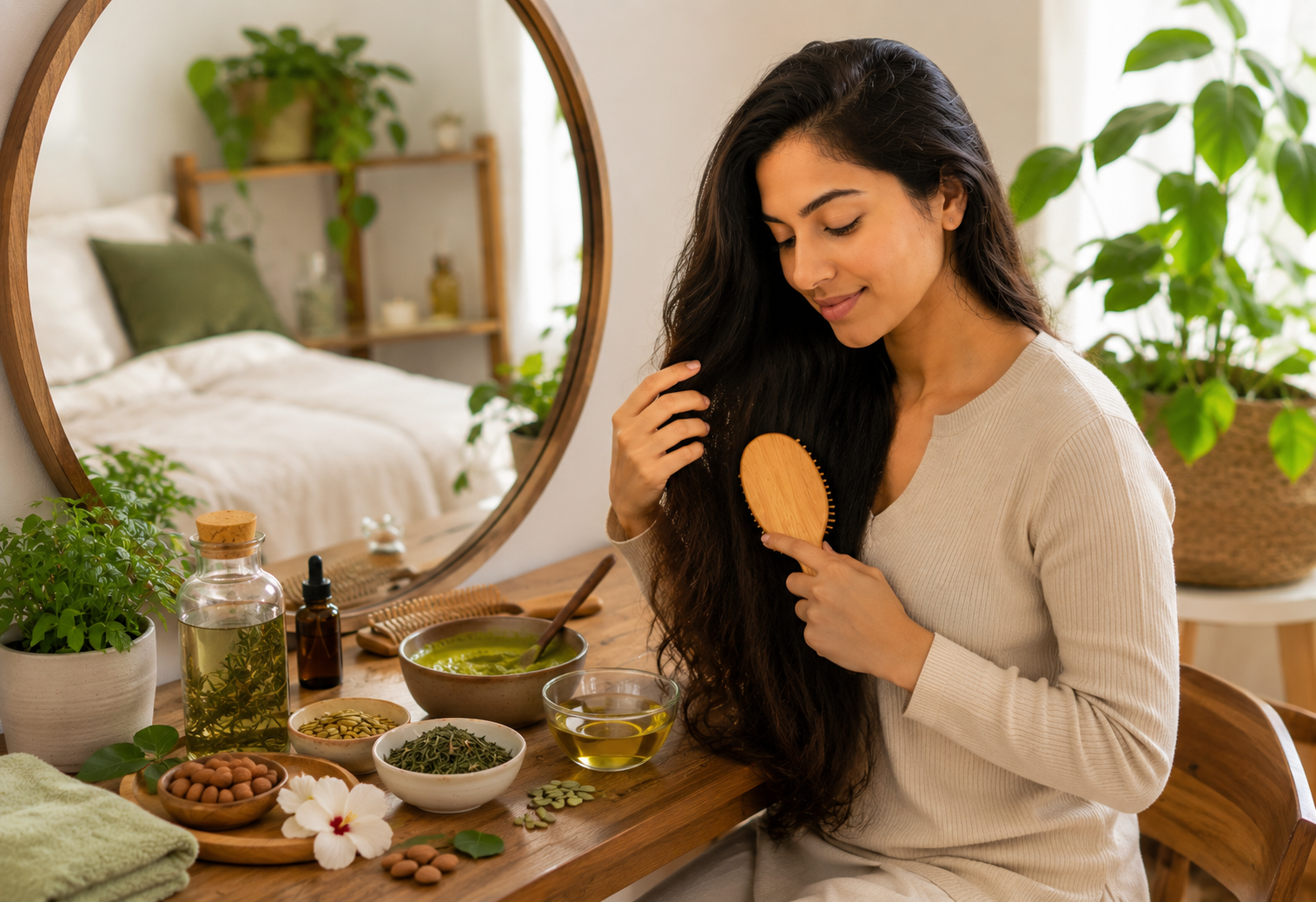
Oil massage is one of the oldest Ayurvedic practices for hair nourishment. It improves blood circulation and helps relax the scalp.
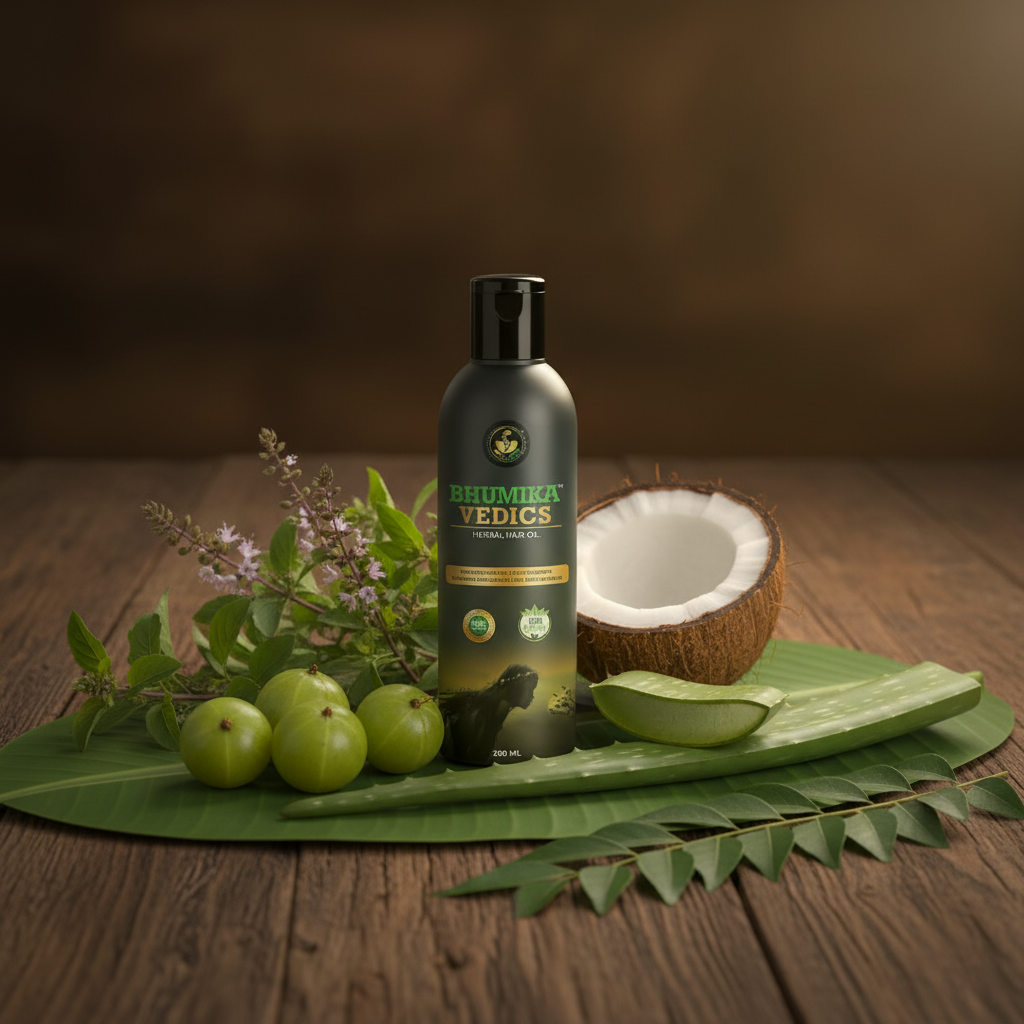
Use a gentle herbal hair oil made with ingredients like bhringraj, amla, coconut oil, and hibiscus. Warm the oil slightly and massage it into the scalp using fingertips.
For best results:
- Oil your hair 2–3 times a week
- Leave it overnight or at least 1 hour
- Avoid aggressive rubbing
Bhumika Vedics offers herbal oil blends inspired by traditional Ayurvedic care, designed to support weak and thinning hair naturally.
2. Wash Hair with a Mild Herbal Shampoo
Many shampoos contain sulphates and harsh cleansers that can dry the scalp further. During postpartum recovery, it is better to use gentle herbal cleansers.
Choose a mild herbal shampoo with plant-based ingredients that clean without stripping natural oils. This helps maintain scalp balance while reducing dryness and breakage.
- A good herbal shampoo may help:
- Remove excess oil gently
- Reduce scalp irritation
- Keep hair soft and manageable
- Support healthier-looking strands
3. Eat Foods That Support Hair Strength
Hair health also depends on nutrition. After childbirth, the body needs extra nourishment to recover.
Include these foods regularly:
- Nuts and seeds
- Green leafy vegetables
- Dates and dry fruits
- Protein-rich foods
- Fresh fruits
- Iron-rich foods
Drink enough water and avoid skipping meals. Healthy hair starts from within.
Everyday Habits That Can Reduce Hair Fall After Pregnancy
Small changes to your daily routine can have a significant impact.
Be Gentle While Combing
Wet hair is weaker and breaks easily. Keep your hair loose and use a wide-tooth comb.
Avoid Excessive Heat Styling
Frequent straightening, curling, or blow-drying may worsen postpartum hair loss. Let hair air dry whenever possible.
Manage Stress Naturally
Stress can increase hair shedding. Try simple calming habits like:
- Deep breathing
- Light stretching
- Walking
- Meditation
- Better sleep routines
Even a few quiet minutes daily can help your body recover better.
Natural Ingredients Mothers Are Searching for Today
Modern consumers today are starting to pay more attention to ingredients. Many people now prefer products with clean, herbal, and traditional formulations instead of synthetic-heavy solutions.
Popular natural hair care trends include:
- Cold-pressed oils
- Sulfate-free shampoos
- Ayurvedic hair masks
- Minimal ingredient formulas
- Scalp-first hair care routines
This growing shift shows that people want long-term hair health instead of quick fixes.
When Should You Consult a Doctor?
Postpartum hair fall is normal, but sometimes extra care may be needed.
Speak with a doctor if:
- Hair fall continues beyond one year
- You notice bald patches
- You feel extremely tired or weak
- Hair loss becomes very severe suddenly
Sometimes low iron, thyroid imbalance, or nutritional deficiencies may also contribute to excessive shedding.
Conclusion
Postpartum hair fall can feel frustrating, but it is often a temporary part of the body’s recovery after childbirth. With patience and the right care, your hair can slowly regain its strength and health. Gentle routines usually work better than aggressive treatments during this phase.
Natural herbal hair care focuses on nourishment instead of quick fixes. Ayurvedic herbs, scalp massage, mild cleansing, and balanced nutrition all work together to support healthier hair naturally. Small daily habits can make a meaningful difference over time.
If you are looking for a gentle and traditional approach to postpartum hair loss, herbal solutions may be worth exploring. Bhumika Vedics combines trusted Ayurvedic wisdom with natural ingredients to support healthy hair care routines for modern lifestyles.
FAQs About Postpartum Hair Fall
1. Is postpartum hair fall normal?
Yes, postpartum hair fall is very common after childbirth. Hormonal changes cause temporary shedding in many women.
2. What's the duration of postpartum hair loss?
For most women, it improves within 6–12 months after delivery. Gentle care and proper nutrition can support recovery.
3. Can herbal oils really help postpartum hair fall?
Herbal oils may help nourish the scalp, improve circulation, and reduce dryness. Consistent use often supports healthier-looking hair over time.
4. Which oil is best for hair fall after pregnancy?
Oils containing bhringraj, amla, hibiscus, and coconut oil are traditionally used in Ayurvedic hair care.
5. Should I avoid shampoo during postpartum hair loss?
No, but you should choose a mild herbal shampoo instead of harsh chemical-based cleansers.
6. Does stress increase postpartum hair loss?
Yes, stress and lack of sleep can worsen hair shedding after pregnancy.
7. Can diet affect postpartum hair fall?
Absolutely. Iron, protein, vitamins, and hydration all play an important role in healthy hair growth.
8. How often should I oil my hair after pregnancy?
For most people, two to three times per week is sufficient.
9. Are herbal products safe for sensitive scalps?
Many herbal products are gentler compared to strong chemical formulas, especially when made with clean ingredients.
10. Can postpartum hair loss be prevented completely?
It may not be fully preventable, but proper care can reduce its severity and support faster recovery.